Premium Dulhan Mehndi Design | Contact for Bookings
Dulhan Mehndi Design
Welcome to Dulhan Mehndi
Dulhan Mehndi Design – Beautiful Bridal Henna Ideas for 2025
Discover exquisite dulhan mehndi designs, step-by-step application tips, and expert advice to create a memorable bridal look. Explore 2025’s latest bridal henna trends.
Introduction to Dulhan Mehndi: The Sacred Art of Bridal Henna
Dulhan mehndi holds a cherished place in South Asian wedding traditions, representing far more than decorative body art. This ancient practice transforms a bride’s hands and feet into canvases of intricate beauty, symbolizing love, prosperity, and the sacred bond of marriage. The rich, earthy fragrance of henna and the anticipation of its deep crimson stain have been integral to bridal preparations for centuries.
The significance of bridal henna extends beyond aesthetics. According to cultural beliefs, the darker the mehndi color on a bride’s hands, the deeper the love between the newlyweds and the stronger the bond with her in-laws. This beautiful tradition creates moments of joy and bonding as female relatives and friends gather for the mehndi ceremony, sharing stories, songs, and blessings while the bride receives her elaborate designs.
Wedding mehndi designs have evolved dramatically over the years, blending traditional motifs with contemporary elements to reflect modern brides’ personalities. From full-coverage intricate patterns to minimalist elegant designs, today’s dulhan mehndi offers endless possibilities for every bride seeking to make her wedding day unforgettable.
Our Mission
To preserve and celebrate the timeless art of dulhan mehndi while empowering brides with comprehensive knowledge, expert guidance, and inspiration to create their perfect bridal henna experience. We are dedicated to connecting brides with skilled mehndi artists and providing authentic information that honors cultural traditions while embracing contemporary innovation.
Our Vision
To become the world's most trusted resource for bridal mehndi, where every bride—regardless of cultural background or geographic location—can discover, learn, and celebrate the beauty of henna art. We envision a global community where the sacred tradition of dulhan mehndi continues to flourish, evolve, and inspire future generations.
Latest Dulhan Mehndi Design Trends 2025
The 2025 dulhan mehndi trends showcase an exciting fusion of heritage and innovation. Modern brides are embracing personalized elements that tell their unique love stories through henna art. Portrait mehndi has emerged as a stunning trend, featuring delicate depictions of the couple within the design patterns, creating a truly customized bridal look.
Latest bridal mehndi designs are incorporating geometric precision alongside traditional florals. Mandala-inspired centerpieces on palms, complemented by fine linear extensions along fingers, create a balanced aesthetic that photographs beautifully. Modern dulhan mehndi also features negative space strategically used to highlight skin tone, making designs appear lighter yet equally captivating.
Color experimentation is gaining momentum in 2025, with brides adding white henna, gold glitter, and colored stones to enhance traditional brown henna. These embellishments create a three-dimensional effect that adds glamour to wedding photographs. Additionally, extended designs flowing from hands to arms and from feet up to knees are becoming increasingly popular, creating a cohesive bridal aesthetic.
Traditional vs Contemporary Mehndi Designs
Traditional dulhan mehndi typically features dense, full-coverage patterns with classic motifs like peacocks, lotus flowers, paisleys, and intricate jaali work. These time-honored designs often include hidden initials of the bride and groom, small figures depicting wedding scenes, and continuous patterns that flow seamlessly across hands and feet. The traditional approach emphasizes complexity and symbolism, with every element carrying cultural significance.
Arabic mehndi designs
bring a different aesthetic altogether, featuring flowing, vine-like patterns with large floral elements and significant negative space. Unlike the dense Indian styles, Arabic designs are more open and free-flowing, often covering just one side of the hand or creating asymmetrical patterns. These designs are perfect for brides seeking elegance without overwhelming coverage, and they’re particularly popular for destination weddings due to their relatively quicker application time.
Rajasthani dulhan mehndi
stands out for its extremely intricate and dense patterns covering the entire hand up to the elbow and feet up to the knee. These designs feature fine lines, elaborate jaali work, peacock and lotus motifs, and often include depictions of royal processions and palace architecture. The level of detail in Rajasthani style is unparalleled, making it a favorite for brides seeking truly elaborate designs.
Punjabi bridal mehndi
is characterized by bold, thick outlines and prominent floral patterns. This style often features larger design elements with significant spacing between motifs, creating a striking visual impact. Punjabi designs commonly include mango motifs, sunflowers, and stylized leaves with distinctive boldness that photographs exceptionally well.
Step-by-Step Dulhan Mehndi Application Guide
Achieving stunning dulhan mehndi requires proper planning, quality materials, and skilled execution. Whether you’re a professional mehndi artist or a bride preparing for DIY application, following a systematic approach ensures beautiful, long-lasting results.
Begin by selecting your design at least two weeks before the wedding. This allows time for trials and adjustments. Book your mehndi artist well in advance, especially during wedding season, and schedule the application one to two days before the wedding ceremony for optimal color development.
The application process starts with ensuring your hands and feet are completely clean and free from oils or lotions. The mehndi artist will typically start with the bride’s right hand, beginning from the fingertips and working toward the wrist, then moving to the palm and back of the hand. The process requires patience, as intricate bridal designs can take anywhere from three to six hours to complete on both hands and feet.
During application, maintain steady hands and avoid sudden movements. Communicate with your artist about comfort breaks, as the process is lengthy. Once complete, the mehndi paste needs to dry thoroughly, which typically takes 30-45 minutes. Modern brides often use a mixture of lemon juice and sugar applied gently over dried mehndi to help seal it and enhance color development.
Quality materials significantly impact the final result of your dulhan mehndi. The foundation of great henna art begins with premium henna powder or professionally prepared best mehndi cones. When purchasing henna powder, look for finely sifted, fresh powder with a greenish-brown color—avoid anything that appears dull or excessively old.
Natural henna ingredients for the paste include henna powder, lemon juice or tea for liquid base, essential oils (eucalyptus or lavender) to enhance color, and sugar to improve consistency. Some artists add black tea, coffee, or clove oil to deepen the final stain. The paste should have a smooth, toothpaste-like consistency for optimal application.
For application, professional mehndi cones with fine tips allow for precise detailing. Alternatively, applicator bottles with metal tips offer excellent control for intricate work. Additional supplies include cotton swabs for corrections, plastic wrap or medical tape for sealing applied mehndi, and a mixture of lemon juice and sugar for post-application sealing.
Essential Mehndi Tools & Ingredients
Proper skin preparation is crucial for achieving deep, long-lasting dulhan mehndi color. Start your preparation at least 24 hours before application. Exfoliate your hands and feet thoroughly to remove dead skin cells, as mehndi stains best on fresh, clean skin. Use a gentle scrub with natural ingredients like sugar and olive oil to avoid harsh chemicals.
After exfoliating, avoid applying any lotions, oils, or perfumes to the areas where mehndi will be applied. These create barriers that prevent henna from properly penetrating the skin. Keep your hands and feet completely moisturizer-free for at least 12 hours before application.
On the day of application, wash your hands and feet with plain water and mild soap, avoiding antibacterial soaps that might interfere with color development. Pat dry completely, ensuring no moisture remains. Some brides apply eucalyptus oil very lightly to their palms several hours before application, as this can help enhance color, but this should be done sparingly and allowed to absorb fully.
Additionally, ensure you’re well-hydrated and have eaten properly before your mehndi session, as the process is lengthy and you’ll need to keep your hands still for extended periods.
Preparing the Skin for Mehndi
Care Tips to Enhance Dulhan Mehndi Color
The richness and longevity of your dulhan mehndi color depend significantly on post-application care. After your mehndi application is complete and has dried, the paste needs to remain on your skin for as long as possible—ideally 8-12 hours for the darkest stain.
Once the paste has dried completely, apply the lemon-sugar mixture carefully using a cotton ball. This helps seal the mehndi and keeps it moist for deeper penetration. After applying this mixture, you can wrap your hands loosely in toilet paper or medical tape to protect the design while sleeping. Many brides apply their mehndi in the evening and sleep with it on, removing it the following morning.
When removing dried mehndi, never use water initially. Instead, scrape off the dried paste gently using a butter knife or the back of a spoon, or simply rub your hands together to flake it off. The longer you can avoid water contact after removal, the better your color will develop. Try to keep your hands dry for at least 12 hours after removing the paste.
To enhance mehndi color naturally, expose your stained hands to warm steam, apply clove smoke by carefully holding your hands over smoking cloves (be cautious with heat), or gently warm your hands near (not directly on) a heat source. These methods help open pores and darken the stain. Apply a thin layer of mustard oil or coconut oil after the paste is removed to protect the design and deepen the color.
Avoid washing your hands with soap for the first 24 hours. When you must wash, use only plain water and pat dry gently. Avoid chlorinated water, as it can fade mehndi prematurely. With proper mehndi aftercare, your dulhan mehndi can last 2-3 weeks, gradually fading naturally as your skin exfoliates.
Dulhan Mehndi Gallery & Inspiration
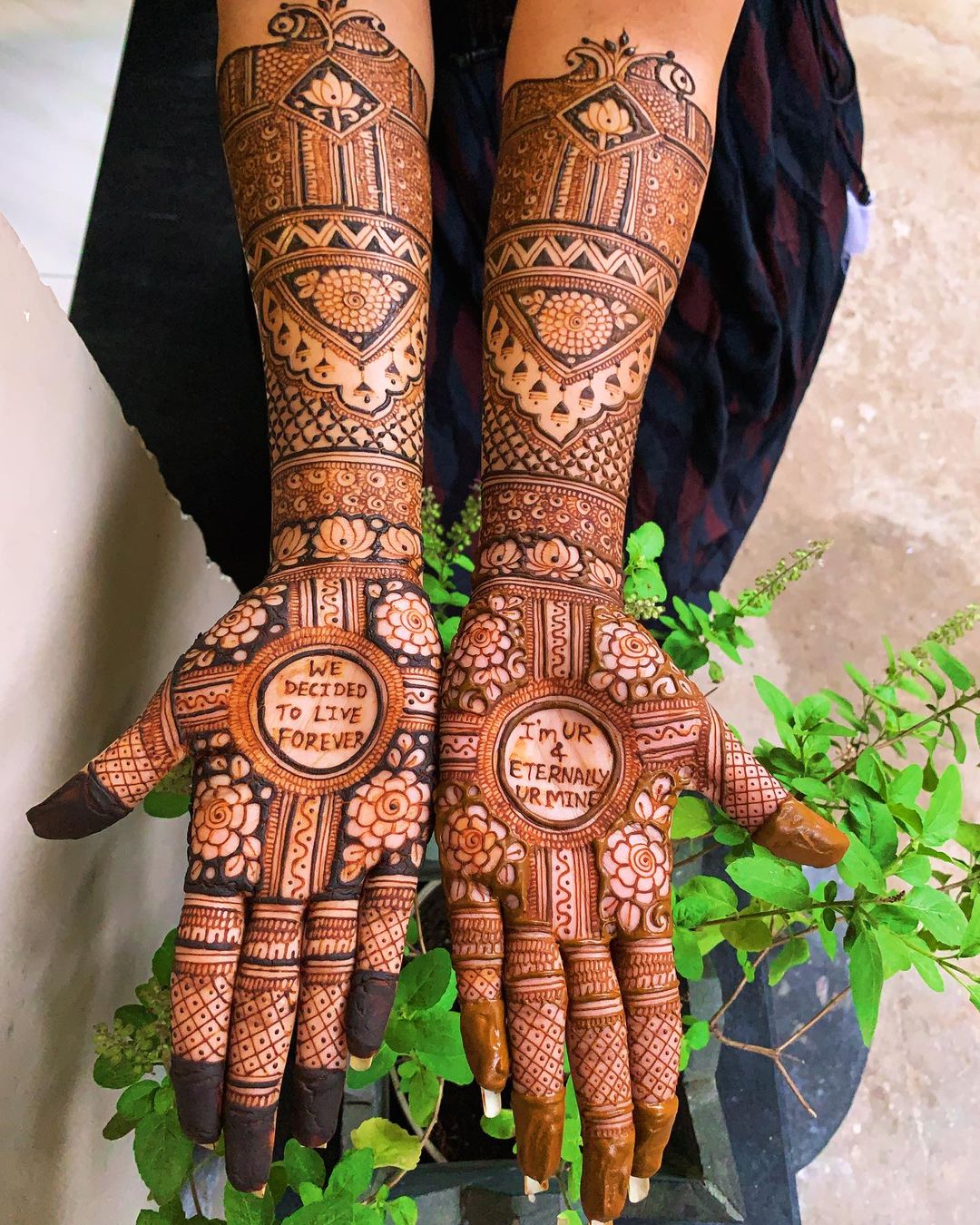
Drawing inspiration from dulhan mehndi design photos helps you visualize your perfect bridal look. A bridal mehndi gallery showcases the incredible diversity available in designs, from traditional full-coverage artwork to modern minimalist statements.
Consider browsing designs that feature intricate peacock motifs, which symbolize beauty and grace. Peacocks can be incorporated as the centerpiece of your palm design, with their elaborate tail feathers flowing across your hand and up your fingers. Floral patterns remain eternally popular, with roses representing love, lotus flowers symbolizing purity, and jasmine depicting divine beauty.
Many brides now opt for storytelling mehndi that depicts their love journey. These designs might include elements representing how the couple met, significant dates incorporated subtly into patterns, or symbols of shared interests. Portrait mehndi, featuring the bride and groom’s faces within the design, creates a deeply personal touch that becomes a conversation starter.
For feet, consider designs that complement your bridal footwear. Ankle bracelets created with mehndi, intricate toe designs resembling jewelry, and patterns that flow elegantly up the ankle and leg create a cohesive bridal aesthetic. Many brides match their hand and feet designs with similar motifs for visual harmony.
When seeking inspiration, look at various cultural styles, modern fusion designs, celebrity bridal mehndi, and seasonal trends. Remember that your mehndi should reflect your personality and complement your overall bridal look, including your outfit, jewelry, and makeup style.


Embrace Your Perfect Bridal Mehndi
Your dulhan mehndi is more than decoration—it’s a celebration of love, tradition, and the exciting journey ahead. Whether you choose elaborate traditional patterns or contemporary minimalist designs, the key is selecting mehndi that resonates with your personal style and makes you feel beautiful on your special day.
Take time to research designs, consult with experienced mehndi artists, and prepare your skin properly for optimal results. Remember that the process itself—the anticipation, the artistry, and the bonding with loved ones during application—is as meaningful as the final design. Your bridal henna will create lasting memories and stunning photographs that you’ll cherish for years to come.
Ready to find your perfect dulhan mehndi design? Consult with professional mehndi artists in your area, schedule trials to test designs and color development on your skin, and book your bridal mehndi session well in advance. Your dream bridal henna awaits!
Get In Touch With Us
FAQ
Frequently Asked Questions
The ideal time to apply dulhan mehndi is one to two days before your wedding ceremony. This timing allows the mehndi to develop its darkest color, which typically peaks 24-48 hours after application. If your wedding is on Saturday, having your mehndi applied on Thursday evening is perfect. This ensures the color is at its richest during your wedding festivities while allowing you time to rest before the big day.
With proper application and aftercare, dulhan mehndi typically lasts 10-14 days, gradually fading as your skin naturally exfoliates. On hands, where skin turnover is faster, mehndi may fade more quickly than on feet. The intensity and longevity depend on factors like henna quality, application technique, how long the paste stayed on your skin, your skin type, and post-application care. Brides can expect their mehndi to remain visible throughout their wedding week and honeymoon.
Absolutely! Natural henna is not only safe but recommended for bridal mehndi. Pure, natural henna creates a beautiful reddish-brown to dark brown stain without any health risks. Avoid "black henna" products, which often contain harmful chemicals like PPD (para-phenylenediamine) that can cause severe allergic reactions. Natural henna has been used safely for thousands of years and is the authentic choice for traditional dulhan mehndi. Ensure your henna is fresh, properly stored, and sourced from reputable suppliers.
Popular 2025 designs include personalized portrait mehndi featuring the couple, minimalist geometric patterns with significant negative space, fusion designs combining traditional and contemporary elements, floral mandala centerpieces with linear extensions, Arabic-style flowing vines with bold flowers, and intricate Rajasthani patterns with modern embellishments. Many brides are also requesting custom designs incorporating their wedding hashtags, meaningful dates, or symbols representing their love story, making each dulhan mehndi truly unique.
Get Started